
Description
1956 Ford F100 Bench Seat: The Complete Guide to Classic Truck Comfort and Restoration
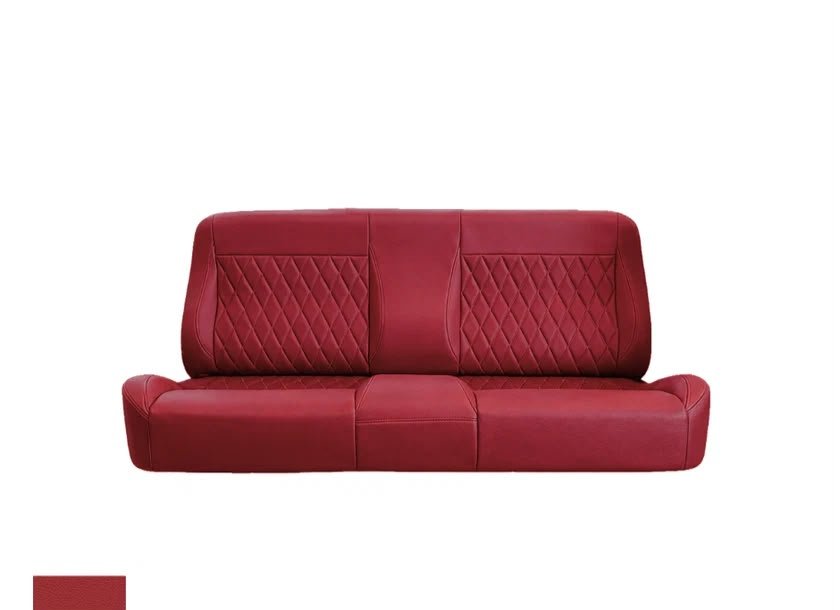
The 1956 Ford F100 is one of the most distinctive classic American pickups ever produced. Its unmistakable styling, practical proportions, and strong connection to Ford’s postwar truck heritage have made it a favorite among collectors, restorers, hot rod builders, and enthusiasts who want a classic truck they can actually drive.
For a vehicle this iconic, the interior deserves the same level of attention as the exterior. Paint, chrome, wheels, suspension, and engine work may attract attention from outside the truck, but the seat determines how the vehicle feels every time you get behind the wheel.
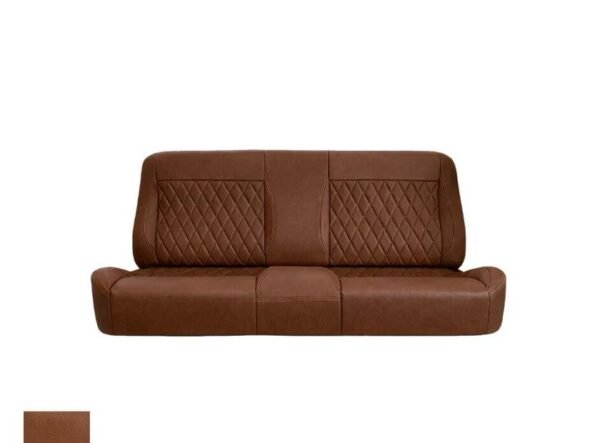
That makes a 1956 Ford F100 bench seat far more important than a simple upholstery component. It is the centerpiece of the cabin, the foundation of the driving position, and one of the first interior features people notice when they open the door.
The right bench seat should combine authentic classic styling with modern levels of comfort and durability. It needs to look appropriate in a vintage Ford while providing enough support for long drives, weekend cruising, and regular use.
The product featured here is built to order specifically for single-cab trucks and 1956 Ford F100 applications. It is designed around the philosophy that a great seat should not merely look good at a show—it should make every mile more enjoyable.
With a high-density foam core, heavy-duty spring system, precision frame construction, and hand-stitched upholstery, this bench seat is designed to provide a durable foundation for a premium F100 interior.
Why the 1956 Ford F100 Bench Seat Is the Centerpiece of the Interior
A classic pickup cabin is relatively simple compared with a modern vehicle. There are fewer screens, fewer electronic systems, and fewer layers of interior trim.
That simplicity makes the bench seat even more important.
The seat occupies a large visual area, establishes the driving position, and influences how the rest of the interior is designed.
The Seat Defines the Driving Experience
Everything inside the cab revolves around the driver’s position.
The steering wheel, pedals, dashboard, mirrors, and controls are all experienced from the seat. If the seat is uncomfortable, poorly supported, or structurally worn, even a mechanically excellent F100 can become difficult to enjoy on longer drives.
A properly designed bench seat changes that experience.
It provides a stable seating position while allowing the driver and passenger to settle comfortably into the cabin.
The Bench Seat Preserves Classic Ford Character
The bench seat is an important visual element in a vintage pickup.
Rather than dividing the cabin into two heavily bolstered individual seats, a traditional bench maintains the open, straightforward character associated with classic trucks.
For owners restoring a 1956 F100, that familiar configuration can be an important part of preserving the truck’s identity.
At the same time, the seat does not have to remain uncomfortable simply because it looks traditional.
Modern foam, springs, framing, and upholstery techniques can significantly improve the experience without changing the classic appearance.

What Makes This 1956 Ford F100 Bench Seat Different?
The product is built around the idea of combining period-correct design with modern comfort engineering.
Instead of focusing exclusively on appearance, the construction addresses the components underneath the upholstery as well.
The product features:
- High-density foam core
- Heavy-duty spring system
- Hand-stitched upholstery
- Reinforced stress points
- Precision frame construction
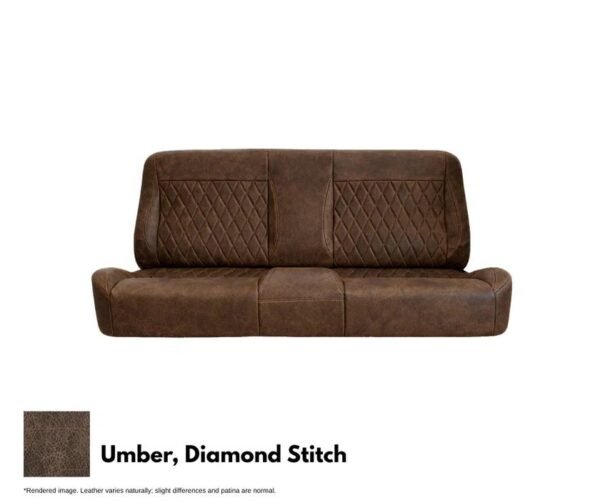
- Choice of marine-grade vinyl or genuine full-grain leather
- Built-to-order construction for single-cab trucks
Each of these elements contributes to the finished seat.
High-Density Foam Core
Foam is one of the most important parts of a comfortable bench seat.
Old factory foam can deteriorate after decades of use. It may become compressed, brittle, uneven, or unable to provide sufficient support.
A high-density foam core provides a fresh foundation for the seat and is designed to maintain its supportive structure over time.
This matters particularly for an F100 that will be driven regularly.
A show-quality appearance is useful, but a seat should also remain comfortable after hours behind the wheel.
Heavy-Duty Spring System
The spring system provides another layer of support.
A properly engineered spring system allows the seat to flex under load rather than simply compressing the foam. The product is designed with balanced spring action intended to help absorb road impact without unnecessary bottoming out.
For a classic truck, that is particularly valuable.
Older suspension systems can transmit more road movement into the cabin than the average modern vehicle. A well-designed seat can help make the driving experience more comfortable by managing some of that movement at the seating level.
Hand-Stitched Upholstery
The upholstery is hand stitched and designed around authentic patterns with reinforced stress points.
This approach provides more than visual appeal.
Stress points are among the areas most likely to experience wear during repeated use. Reinforcement can help the upholstery remain durable while maintaining the intended shape.
Hand-finished upholstery also gives the seat a more authentic custom-built appearance.
Choosing the Right Material for Your F100
One of the benefits of this 1956 Ford F100 bench seat is the ability to select a material that matches the purpose and style of the truck.
The product is offered with marine-grade vinyl or genuine full-grain leather.
Marine-Grade Vinyl for a Working Truck
Vinyl is a practical choice for an F100 that sees frequent use.
It can suit trucks that are driven regularly, used for hauling, taken to shows, or exposed to conditions where easy maintenance is important.
Marine-grade vinyl also fits naturally with the working-truck heritage of the F100.
It can provide a clean, durable surface while maintaining the traditional visual character of a classic pickup.
Genuine Full-Grain Leather for a Show-Quality Build
For owners building a premium restoration or show-quality truck, genuine full-grain leather provides a more luxurious finish.
Leather offers natural texture and visual depth while reinforcing the handcrafted character of the interior.
It is particularly effective when paired with premium door panels, a custom dashboard, leather steering wheel, quality carpeting, and other upgraded interior components.
The choice between vinyl and leather ultimately depends on how the truck will be used and the level of finish the owner wants to achieve.
Built for Miles, Not Just Shows
One of the strongest aspects of this bench seat is its focus on real-world use.
A classic F100 can be a beautiful show vehicle, but many enthusiasts want to drive their trucks.
That means the interior has to perform as well as it looks.
Comfort for Long Drives
A high-density foam core and heavy-duty spring system provide the foundation for long-distance comfort.
Whether the truck is being driven across town or taken on a road trip, supportive seating can make the experience substantially more enjoyable.
Durability for Regular Use
A seat that looks perfect when new but deteriorates quickly under normal use is not a successful restoration component.
Hand-stitched upholstery, reinforced stress points, and precision frame construction are intended to provide long-term durability.
A Stable Foundation
The frame is what keeps the seat securely positioned inside the truck.
Precision construction gives the bench seat a solid foundation and helps ensure that the seating remains stable rather than developing excessive movement over time.
How the Bench Seat Fits Into a Complete F100 Interior
A seat should not be treated as an isolated component.
The best 1956 Ford F100 interiors are designed around a unified material and color strategy.
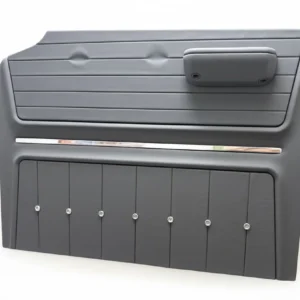
Match the Door Panels
The door panels are positioned directly beside the bench seat.
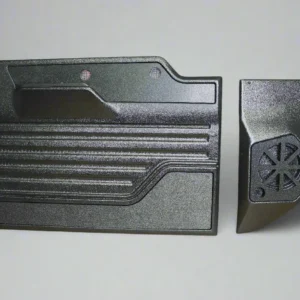
Using matching or complementary upholstery can create a much stronger visual connection between the two.
A leather bench seat can look especially impressive when paired with leather door panels.
A premium vinyl seat can also work well with classic-style door panels and traditional interior trim.
Coordinate the Dashboard
The dashboard establishes much of the cabin’s visual personality.
A traditional F100 dashboard can look excellent alongside a bench seat with classic upholstery patterns, while a custom dashboard may call for more refined leather or stitching.
The goal is not necessarily to make everything identical. Instead, the materials should complement one another.
Consider the Headliner
The headliner occupies a large surface above the occupants.
Choosing a compatible color and material creates a more cohesive interior and helps prevent the seat from looking disconnected from the upper cabin.
Complete the Lower Interior
Carpet, floor mats, kick panels, and other lower interior pieces should also be considered.
A premium bench seat deserves a finished floor and surrounding trim that matches its quality.
Why Precision Frame Construction Matters
The frame is the structural foundation of the bench seat.
A poorly constructed frame can result in movement, uneven support, or difficulty maintaining the correct seating position.
Precision frame construction provides a stronger basis for the foam, springs, and upholstery.
Secure Mounting
The seat must mount securely to the truck.
A properly constructed frame helps maintain the intended mounting relationship between the seat and the vehicle floor.
Before final installation, the mounting area should be inspected carefully, especially on a vehicle that has undergone restoration or modification.
Long-Term Stability
A quality frame also helps the seat maintain its shape and position through years of use.
This is particularly important for daily-driven trucks where the seat will experience repeated loading rather than occasional use.
Designing the Seat Around the Purpose of the Truck
Every F100 restoration has a different goal.
The ideal seat depends on what the owner wants the vehicle to become.
Traditional Restoration
A factory-inspired F100 restoration may benefit from classic upholstery patterns, traditional materials, and a simple bench configuration.
Marine-grade vinyl can provide a practical period-oriented appearance, while leather can elevate the same classic design into a more luxurious direction.
Weekend Cruiser
A cruiser needs to be comfortable enough for regular road trips while still looking exceptional.
A supportive foam core and heavy-duty spring system make the bench seat particularly suitable for this kind of vehicle.
Daily Driver
A daily-driven F100 places greater demands on the seat.
Durability becomes just as important as appearance, making reinforced upholstery, quality springs, and a strong frame valuable considerations.
Show Truck
A show truck may place greater emphasis on material quality and presentation.
Genuine full-grain leather and carefully finished hand stitching can provide the premium appearance needed for a high-end interior.
Common Problems With Original F100 Bench Seats
Many original seats have survived for decades, but that does not necessarily mean they are still in ideal condition.
Collapsed Foam
Old foam often loses its resilience.
This can create uncomfortable pressure points and an uneven seating surface.
Worn Springs
Springs can fatigue over time and may no longer provide the support they originally did.
Damaged Upholstery
Years of use can lead to:
- Cracks
- Tears
- Fading
- Stains
- Worn seams
- Weak stress points
Aging Frames
Original frames can develop corrosion, damage, or previous repairs.
Replacing the entire seat assembly can be more practical than attempting to rebuild every worn component individually.
Installation Considerations for a 1956 Ford F100 Bench Seat
Classic vehicle installation requires realistic expectations.
The product is a custom aftermarket component intended for classic vehicles, and minor adjustments, trimming, or fitting may be required because older trucks can vary due to previous restorations, repairs, and modifications.
Inspect the Mounting Area
Before installing the seat, inspect the floor and mounting points.
Look for corrosion, repaired sections, aftermarket brackets, or other modifications.
The seat should be installed on a structurally sound foundation.
Check the Driving Position
Before final installation, verify the relationship between the seat, steering wheel, pedals, dashboard, and doors.
The driver should be able to operate the controls comfortably and safely.
Test Fit Before Final Assembly
A test fit can reveal clearance or positioning issues before the seat is permanently secured.
This is particularly important when the truck has been modified from its original configuration.
Professional Installation Is Recommended
Professional installation is recommended but not required.
An experienced installer can evaluate the specific truck and make any necessary adjustments while ensuring the finished seat is properly secured.
Why a Bench Seat Can Be Better Than Bucket Seats for a Classic F100
Bucket seats are popular in modernized trucks, but a bench seat has several advantages for a classic F100.
It Preserves the Original Character
A bench seat immediately reinforces the vehicle’s vintage identity.
It Creates a Larger Seating Area
The continuous seating surface provides a different level of flexibility than two separate bucket seats.
It Simplifies the Interior Design
A bench does not require a large center console, allowing the cabin to maintain a clean, open layout.
It Fits the Truck’s Heritage
The bench seat is part of the classic pickup experience.
For owners who want their F100 to feel authentically vintage while offering modern comfort, it is an excellent choice.
Built to Order for 1956 Ford F100 Single-Cab Trucks
This bench seat is built to order for single-cab trucks and 1956 Ford F100 applications.
That means customers should plan for the stated production period rather than expecting immediate availability.
The assembly time is approximately 4–6 weeks.
Shipping is listed as TBD, with an estimate provided.
For a restoration project, the seat should be ordered early enough to align with the rest of the interior schedule.
Product Expectations for Classic Vehicle Owners
Classic vehicles rarely have identical histories.
One 1956 F100 may retain its original floor and mounting points, while another may have undergone extensive restoration or customization.
Those differences can affect the installation of a replacement bench seat.
Minor fitting adjustments may therefore be necessary.
Customers should also understand that product images may not represent every finished configuration and that material appearance can vary depending on leather grain, vinyl characteristics, dye lots, and lighting.
The goal is to provide a high-quality custom component while recognizing the individual nature of classic vehicles.
Frequently Asked Questions About the 1956 Ford F100 Bench Seat
What is a 1956 Ford F100 bench seat?
A 1956 Ford F100 bench seat is the traditional full-width front seating configuration designed for the single-cab F100. It provides a classic appearance while serving as the primary seating position for the driver and passenger.
What makes this bench seat different from an original seat?
The design combines classic styling with modern construction features including a high-density foam core, heavy-duty spring system, hand-stitched upholstery, reinforced stress points, and precision frame construction.
What materials are available?
The product can be finished in marine-grade vinyl or genuine full-grain leather, depending on the desired application and appearance.
Is the frame included?
Yes. The product is supplied as a bench seat with a precision-constructed frame.
Is this seat built specifically for a 1956 F100?
The product is described as a built-to-order bench seat for single-cab trucks and 1956 Ford F100 applications. Exact vehicle fitment should still be confirmed before ordering.
Is this seat suitable for daily driving?
The product is designed around long-term comfort and durability, with high-density foam, heavy-duty springs, reinforced upholstery, and a strong frame. Individual vehicle installation and use should still be evaluated carefully.
How long does assembly take?
The stated assembly time is approximately 4–6 weeks.
Is professional installation required?
Professional installation is recommended but not required. Minor adjustments, trimming, or fitting may be necessary because classic vehicles can vary.
Give Your 1956 F100 the Seat It Deserves
A classic pickup is meant to be driven.
The right 1956 Ford F100 bench seat can make the difference between a truck that looks good parked in a garage and one that is genuinely enjoyable to drive.
The featured bench seat combines period-correct design with modern comfort engineering. A high-density foam core provides supportive cushioning, the heavy-duty spring system is designed to absorb road impact, hand-stitched upholstery reinforces the handcrafted character, and precision frame construction provides a stable structural foundation.
Material selection also allows the seat to match the truck’s purpose. Marine-grade vinyl can provide a durable solution for a working or regularly driven truck, while genuine full-grain leather can deliver the premium finish expected from a show-quality build.
The most important consideration is that the seat should work with the entire interior.
A quality bench seat deserves coordinated door panels, kick panels, carpeting, dashboard trim, and other interior components. When those details work together, the cabin becomes more than a collection of restored parts.
It becomes a complete driving environment.
For enthusiasts who understand that the best classic trucks are built to be enjoyed, a premium 1956 Ford F100 bench seat provides the foundation for comfortable miles, long-term durability, and an interior that honors the working heritage of the F100 while delivering the quality modern owners expect.
Reviews
There are no reviews yet.