Description
1955-59 Chevy Interior Kit: The Complete Guide to a Premium Classic Truck Restoration
The 1955–1959 Chevrolet truck generation is one of the most recognizable eras in classic American truck history. Known for its distinctive body styling, rounded design details, and strong visual identity, these trucks remain highly desirable among collectors, restorers, hot rod builders, and custom-truck enthusiasts.
Restoring one of these classic pickups is about much more than repairing the body and rebuilding the drivetrain. The interior is where the truck becomes a complete vehicle. A properly designed cabin can preserve the character of the original Chevrolet while introducing better materials, cleaner construction, and the level of craftsmanship expected from a modern show-quality restoration.
A premium 1955-59 Chevy Interior Kit provides an efficient way to approach that transformation. Rather than purchasing individual components from different suppliers and attempting to match materials, colors, and finishes, a complete interior package can create a coordinated design from the beginning.
The featured kit is designed specifically to upgrade a classic Chevy truck with a premium, show-quality interior. It includes a choice of bench seat or bucket seats, matching frames, door panels, kick panels, headliner, visors with brackets, a dash pad, and a finished back wall. The components are designed around modern manufacturing methods and premium materials, including 100% Italian leather, lightweight ABS plastic, and precision CAD-designed construction.
For owners interested in creating a traditional restoration or a 1955-59custom Interior, this type of complete package provides a strong foundation for achieving a cohesive and professionally finished result.
Understanding the 1955-59 Chevy Truck Interior
The 1955–1959 Chevrolet trucks are particularly appealing because their cabins combine simplicity with distinctive styling. The original interiors were designed for practical truck use, but modern restorations often demand significantly more from the space.
Owners today may want improved seating, higher-quality upholstery, better materials, cleaner trim, and a more comfortable driving environment while still retaining the classic look.
A successful restoration therefore needs to strike a balance between preserving the personality of the original truck and introducing upgrades that improve the quality and usability of the cabin.
Why the Interior Deserves as Much Attention as the Exterior
The exterior usually receives the majority of the attention during the early stages of a restoration. Paint, bodywork, wheels, bumpers, and chrome immediately affect the appearance of the truck.
However, once the vehicle is finished, the interior becomes one of the most important parts of the ownership experience.
A truck can have flawless bodywork and an impressive drivetrain, but a cracked dash, worn seat, damaged door panels, or unfinished rear wall can make the build feel incomplete.
A complete 1955-59 Interior restoration solves that problem by treating the cabin as one connected design rather than a collection of unrelated parts.
Creating a Consistent Design
The most impressive classic truck interiors have a clear design direction.
The seat upholstery should complement the door panels. The dashboard should transition naturally into the rest of the cabin. The headliner should support the chosen material and color palette. The back wall should look like part of the interior rather than an unfinished section of the cab.
A complete interior kit makes that consistency easier to achieve because the major components are developed to work together.
What Is Included in a Premium 1955-59 Chevy Interior Kit?
A complete package gives the owner the major components needed to transform the cab into a professionally finished environment.
Bench Seat and Frame or Two Bucket Seats and Frames
The kit gives the owner a choice between a bench seat and frame or two bucket seats and frames.
That choice is important because the seating configuration establishes much of the truck’s personality.
A bench seat is the natural choice for a traditional restoration. It maintains the classic pickup-truck appearance and preserves the familiar character of the original interior.
Bucket seats create a more modern custom-truck feel. They work especially well for restomod projects, performance builds, and luxury-oriented interiors where comfort and individual seating are a priority.
Both approaches can work beautifully in a 1955–1959 truck, provided the seating design is coordinated with the rest of the interior.
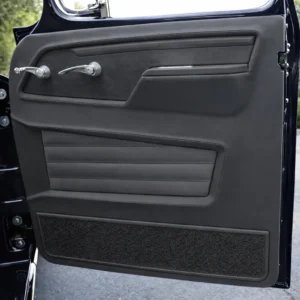
Two Door Panels
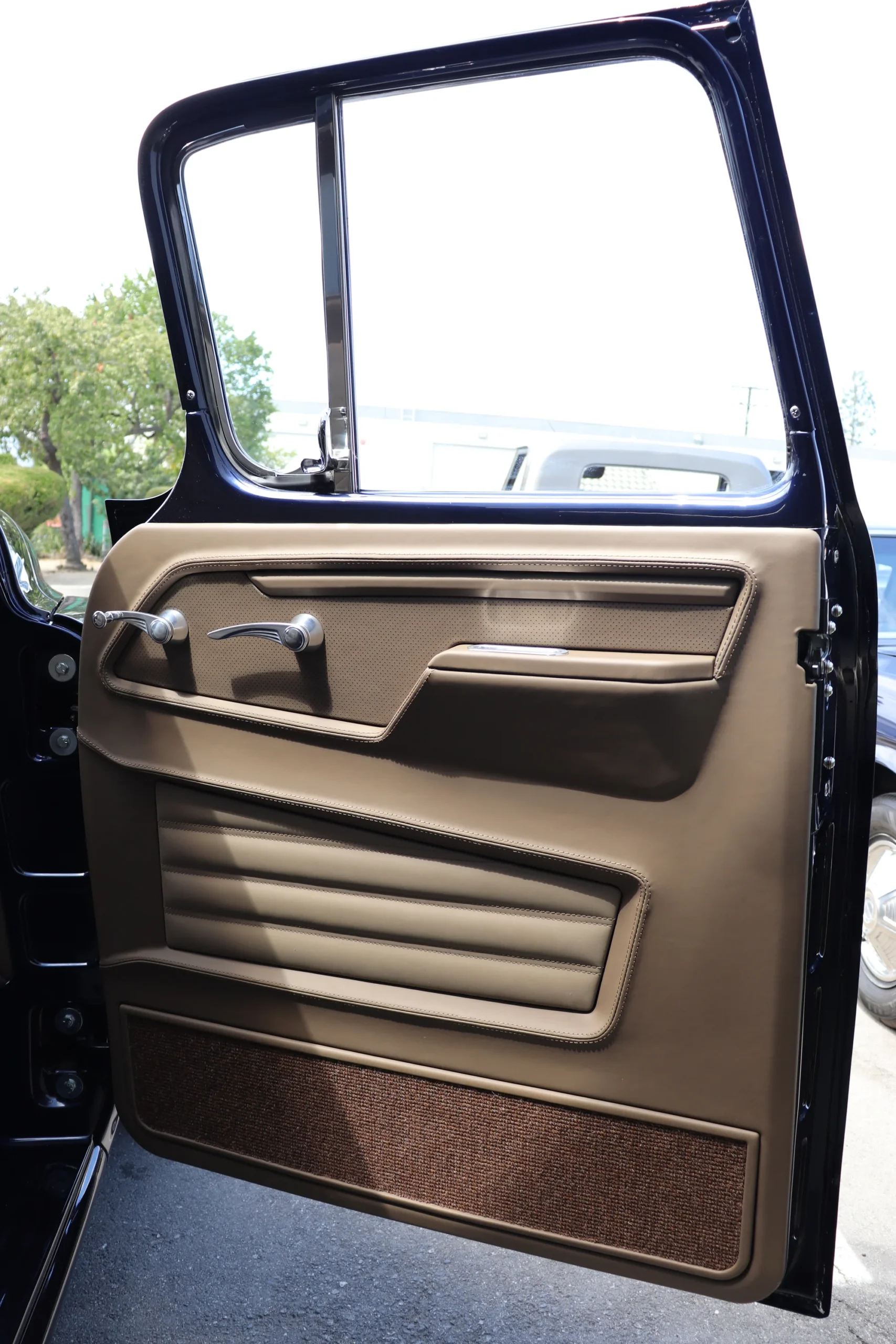
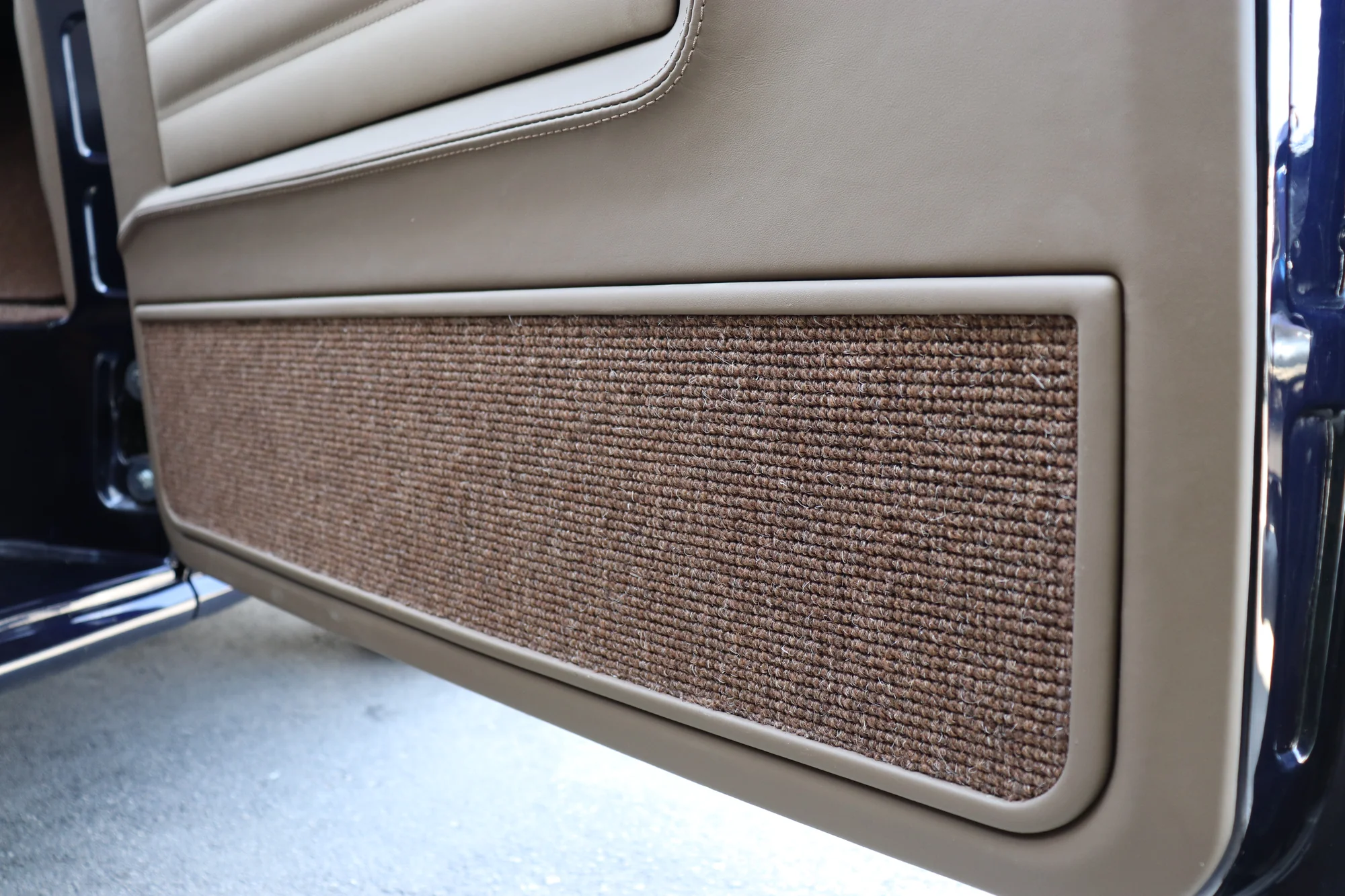
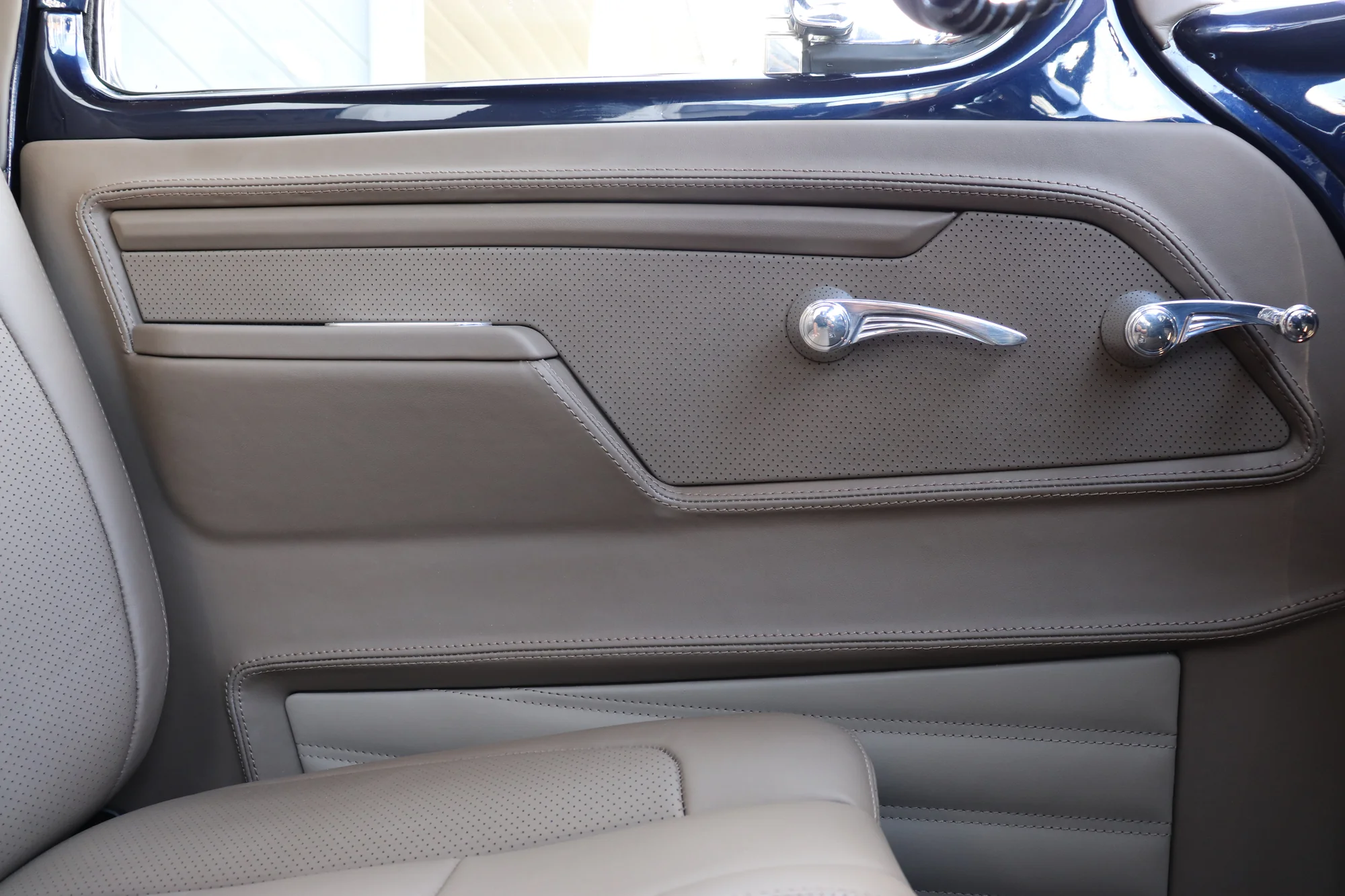
The kit includes two door panels to create a finished and cohesive appearance on both sides of the cab.
Door panels are among the most visible interior surfaces. They also serve as the transition point between the door structure and the upholstered cabin.
Premium door panels can completely change the way an old truck feels inside. Instead of exposed or deteriorated original materials, the owner gets a clean, intentionally designed surface that complements the seats and other components.
Two Kick Panels
The package includes two kick panels.
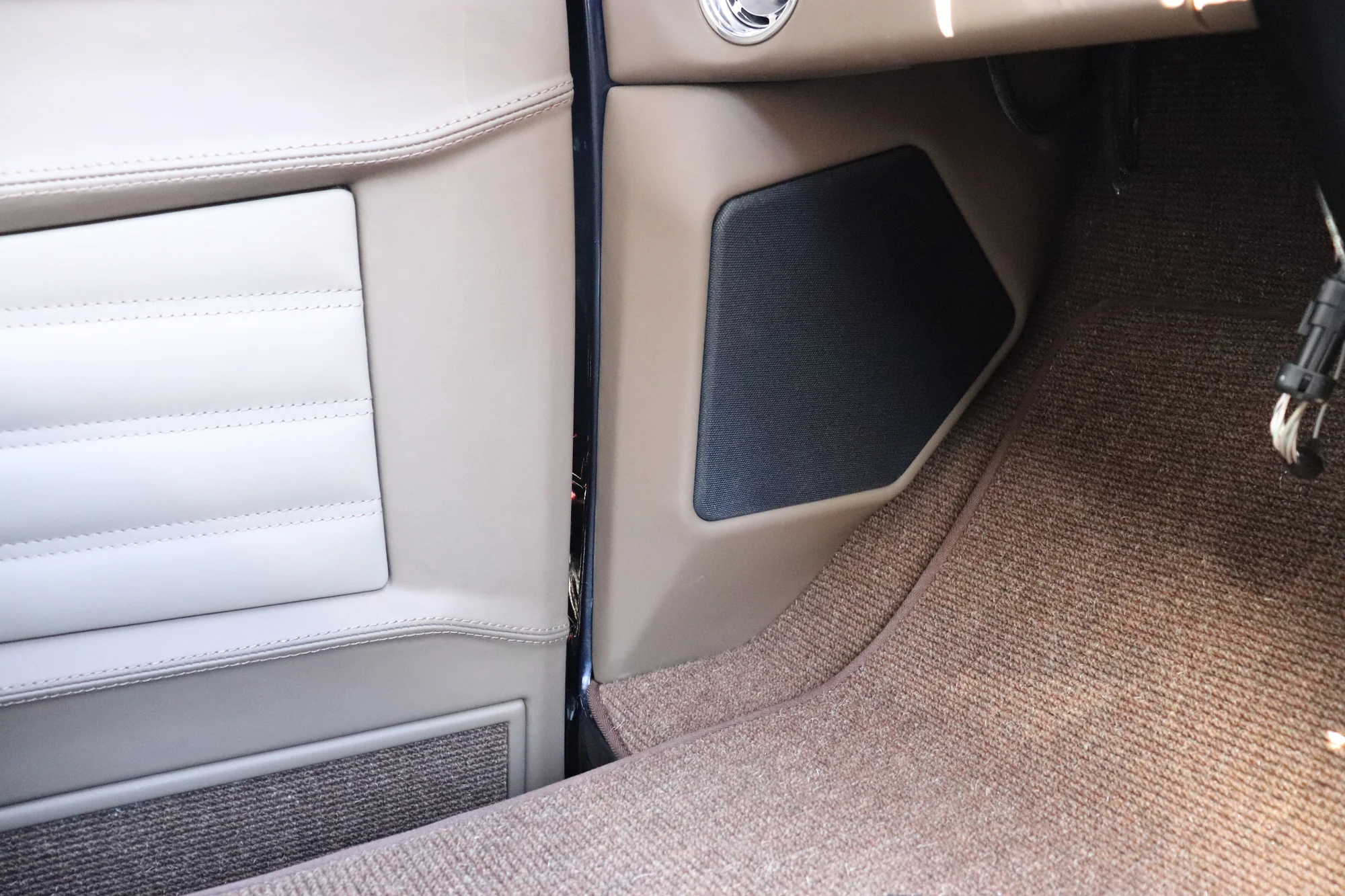
Kick panels are often overlooked, but they provide an important finishing detail at the lower front sections of the cabin. They help cover the interior structure while contributing to the overall visual consistency.
In a custom restoration, kick panels can also provide opportunities for speaker integration or other functional additions depending on the vehicle’s configuration.
Headliner
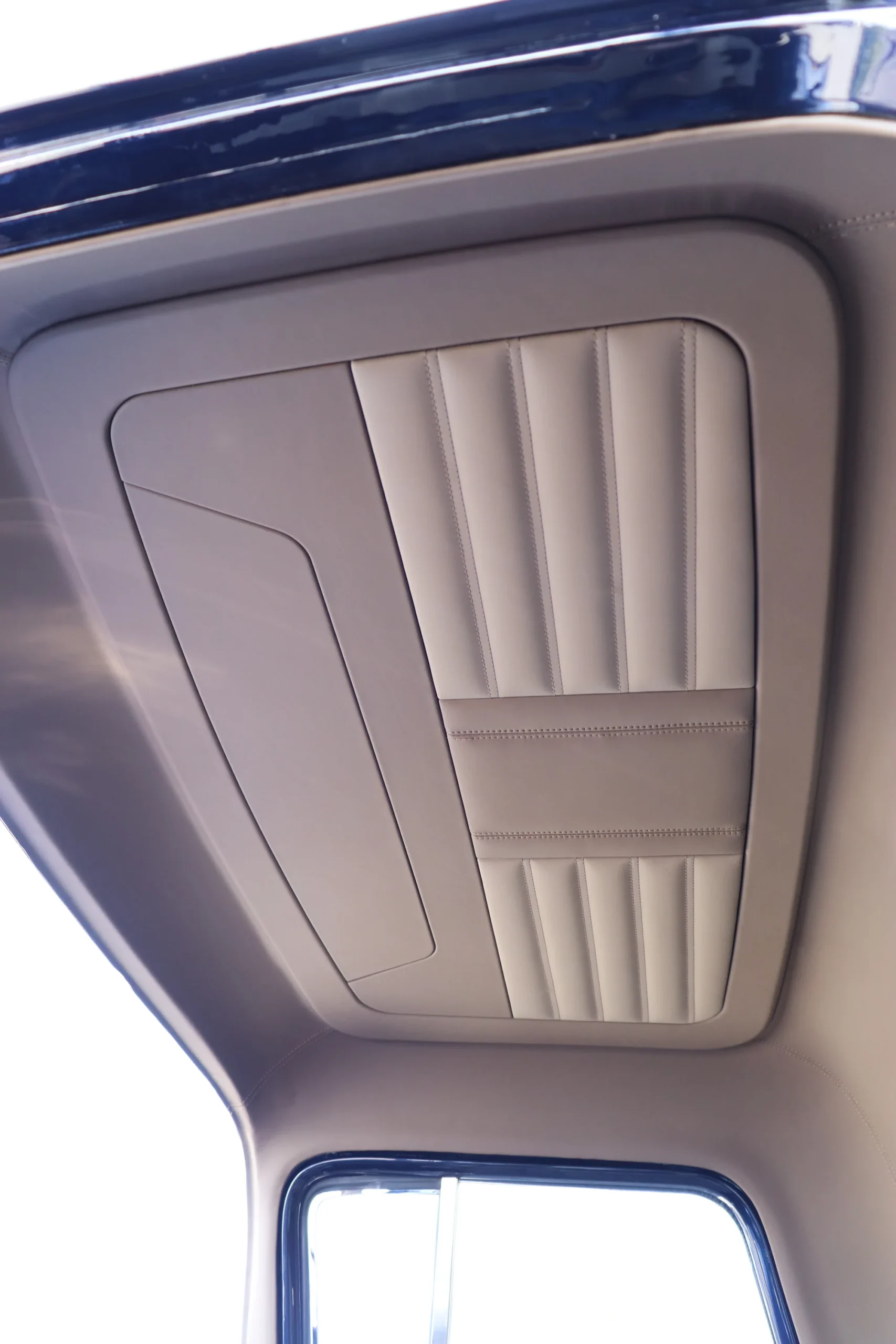
A new headliner gives the upper section of the cab a clean, finished appearance.
The headliner is especially important in a restored interior because it completes the visual transition between the windshield area, roof structure, door panels, and rear section of the cab.
A high-quality headliner can make the interior feel considerably more refined while helping the various materials appear intentional rather than pieced together.
Visors With Brackets
The kit includes two visors with brackets.
These components may be relatively small, but they are highly visible from the driver’s seat and contribute to the overall quality of the finished cabin.
Restoration projects often overlook details such as visors and brackets until the final stages, only to discover that worn or mismatched components detract from the rest of the work. Including them in the complete package helps address those details from the beginning.
Dash Pad
The dash pad is another major feature of the package.
The dashboard is one of the primary focal points of the cab. Cracks, fading, and deterioration in this area can immediately make a restored truck look older than intended.
A clean replacement dash pad can create a strong visual centerpiece and help bring the dashboard into line with the rest of the updated interior.
Back Wall
The kit also includes a back wall.
This is an important addition because the rear wall of a classic truck cab can represent a surprisingly large visual area. Leaving that section unfinished can make the interior feel incomplete.
A finished back wall allows the owner to carry the chosen upholstery and design language across the entire cabin.
Why 100% Italian Leather Is Ideal for a Classic Truck
Material selection plays a central role in any high-end interior restoration.
The featured kit uses 100% Italian leather, providing a premium surface designed to combine durability with a sophisticated appearance.
Leather has long been associated with high-end automotive interiors because it offers a timeless look that works across different styles of builds.
In a classic Chevy truck, Italian leather can support several design directions.
A traditional restoration can use a restrained leather color with minimal visual accents. A luxury build can use contrasting leather and stitching to create a more upscale appearance. A full custom build can combine leather with polished metal, wood, or painted accents.
Leather Provides Long-Term Visual Appeal
Unlike some synthetic materials that can look dated as design trends change, genuine leather has a timeless quality.
It can also develop subtle character through use while maintaining a premium appearance when properly cared for.
Because leather is a natural material, buyers should understand that slight variations in grain, texture, and dye-lot color are normal. Two pieces may not appear perfectly identical, and lighting can also influence the way the finished material looks.
These characteristics are part of the appeal of genuine leather.
Lightweight ABS Plastic for Durable Interior Components
The kit also incorporates lightweight ABS plastic in its construction.
For automotive interior applications, lightweight ABS can provide a strong foundation without adding unnecessary weight.
This is especially useful in a classic truck restoration where the goal is often to improve comfort and quality without turning the interior into an excessively heavy assembly.
The material can provide the structural stability needed to support leather and other trim while maintaining a manageable overall weight.
Why Lightweight Construction Matters
A complete interior includes multiple components. Seats, panels, trim, headliner structures, brackets, and other elements all contribute to the vehicle’s final weight.
Using durable but lightweight materials wherever practical allows builders to improve the cabin without unnecessarily increasing the load.
For custom builders who are also upgrading the engine, suspension, braking system, and wheels, maintaining reasonable weight throughout the truck can be an important consideration.
Precision CAD Design and OEM-Quality Integration
Modern manufacturing methods provide a significant advantage when producing replacement interior components for classic vehicles.
The featured kit uses precision CAD design to support an OEM-quality fit and seamless integration.
Computer-aided design allows components to be engineered around accurate measurements and intended mounting locations. This can result in cleaner edges, more consistent dimensions, and better coordination between individual components.
That level of precision is valuable on a classic truck because the replacement parts need to look at home in a vehicle that was originally manufactured decades ago.
Modern Manufacturing With Classic Styling
The goal of a premium aftermarket interior is not necessarily to make the truck look modern.
Instead, modern manufacturing can be used to reproduce and enhance classic styling with improved consistency.
That allows the finished interior to retain the visual identity of the 1955–1959 Chevrolet while benefiting from more advanced construction techniques.
Building a 1955-59 Interior Around a Clear Design Theme
One of the most important decisions a restorer can make is choosing the interior style before purchasing components.
The kit can support multiple approaches, but the strongest results usually come from maintaining a consistent design language.
Factory-Inspired Restoration
A factory-inspired restoration focuses on preserving the original character of the truck.
The bench seat is usually the natural choice, with restrained upholstery, traditional colors, and minimal visible customization.
The goal is not necessarily to reproduce every component exactly as Chevrolet originally built it, but rather to create an interior that looks authentic and period appropriate.
This approach is ideal for collectors and owners who want to preserve the historic appearance of the truck.
Luxury Classic Interior
A luxury-oriented interior uses premium materials to create a more sophisticated environment.
Italian leather can become the dominant material, while carefully selected stitching, trim, and accent colors provide contrast.
The result is a cabin that still looks unmistakably like a classic Chevrolet truck but feels significantly more refined.
Restomod Interior
A restomod combines vintage styling with modern improvements.
Bucket seats can replace the original bench seat, while modern audio equipment, climate control, sound insulation, and upgraded electrical components are integrated discreetly.
This type of build provides the visual appeal of a classic truck with the comfort and practicality expected from a modern driving experience.
1955-59custom Interior: Creating a Truly Personalized Cabin
A 1955-59custom Interior gives the owner the greatest amount of freedom.
Rather than following a factory specification, the entire cabin becomes part of the truck’s personality.
A custom build can include unique leather colors, contrast stitching, polished aluminum, wood accents, custom gauges, upgraded audio, and other personalized features.
The important principle is restraint.
Customization does not mean adding as many different materials as possible. The most successful interiors generally use a carefully controlled combination of textures and finishes.
Choose a Primary Material
Start with one dominant material.
In this kit, Italian leather can serve as the primary surface throughout the cabin.
From there, select supporting materials such as carpet, aluminum, wood, or painted metal.
Select Accent Finishes Carefully
A polished metal accent can add brightness. Wood can introduce warmth. Contrast stitching can add visual definition.
Each element should have a purpose.
When too many competing finishes are used, the interior can become visually cluttered. A refined custom interior usually feels intentional and balanced.
Coordinate the Dashboard
The dashboard should not be treated as an isolated feature.
The dash pad should work with the seat upholstery, door panels, and other interior components.
A well-coordinated dashboard can become one of the strongest design elements in the entire truck.
Why a Complete Interior Kit Is Better Than Sourcing Every Part Individually
Restoring a classic truck often involves sourcing parts from many different vendors.
One supplier may sell seat upholstery, another may offer door panels, and another may specialize in dash pads. While this approach can work, it creates several challenges.
Colors may not match. Materials may vary. Stitching patterns can differ. Trim finishes may look inconsistent. One component may have a slightly different shade than another.
A complete kit reduces those variables.
The components can be developed around the same design philosophy, allowing the owner to create a much more cohesive finished interior.
Reduced Design Guesswork
A complete kit simplifies the design process.
Instead of wondering whether the door panels will match the seats or whether the headliner will complement the dash, the owner starts with a coordinated package.
This is especially beneficial for a show truck where consistency is critical.
A More Efficient Restoration Process
Because the major interior components are planned together, the restoration can progress in a more organized way.
The installer can prepare the cab, verify mounting points, plan the seating arrangement, and schedule final installation around the complete package.
Installation Considerations for a 1955-59 Chevy Interior
Classic vehicles require realistic expectations when installing modern aftermarket components.
The supplied product disclaimer explains that these are custom aftermarket components designed for classic vehicles. Because individual trucks can vary due to age, previous repairs, restorations, and modifications, minor adjustments, trimming, or fitting may be required.
That is a normal consideration when working with a truck that has existed for several decades.
Inspect the Cab Before Installation
Before installing the new interior, inspect the cab carefully.
Check the floor, mounting points, door structures, windshield and window areas, existing wiring, and any previous modifications.
Correcting structural or mechanical issues before installing finished interior components can prevent having to remove those components later.
Test Fit Before Final Installation
Test fitting is one of the most important steps.
Position each major component and confirm that openings, mounting locations, trim areas, and clearances are correct.
This is especially important if the truck has received replacement body panels or previous interior modifications.
Protect the Leather During Installation
Premium leather surfaces should be protected throughout the installation process.
Use clean working surfaces and avoid exposing finished panels to sharp tools, dirt, adhesives, or other materials that could damage the upholstery.
Professional Installation
Professional installation is recommended but not mandatory.
Experienced builders with appropriate tools and knowledge can handle the installation themselves. However, professional installation may be worthwhile for owners pursuing a show-quality result.
An experienced installer can identify fitment issues early and make necessary adjustments while protecting the finished materials.
Product Expectations and Disclaimer
Because classic vehicles have a history, no aftermarket component should automatically be assumed to fit every surviving truck exactly the same way.
The product disclaimer specifically states that minor adjustments, trimming, or fitting may be necessary due to vehicle variations.
It also notes that product images may include renderings, prototypes, or example installations.
Actual products may vary slightly because of:
- Natural material characteristics
- Leather dye-lot variations
- Lighting conditions
- Ongoing product improvements
These differences should be understood before ordering.
The product is an aftermarket component designed for classic vehicles rather than a factory-original Chevrolet part.
The manufacturer also states that it is not responsible for improper installation, installation labor costs, or vehicle modifications required for installation. Customers should review the applicable terms and conditions before purchase.
Planning Around the 4-6 Week Assembly Period
Custom interior components require appropriate planning.
The stated assembly time for this product is approximately 4–6 weeks, and shipping is listed as TBD with an estimate provided.
That means the interior should be ordered early enough to align with the restoration schedule.
Order Before the Final Assembly Stage
Interior installation is often one of the final steps in a truck restoration.
The body may be painted, the drivetrain may be installed, and the wiring may be completed before the cabin receives its final components.
If the interior kit is ordered too late, the truck could be mechanically complete but unable to reach the final stage because the custom interior is still being assembled.
Planning ahead eliminates that unnecessary delay.
Important 1955-59 Interior Planning Tips
Creating a premium interior is easier when the major decisions are made before installation begins.
Define the Truck’s Purpose
Decide whether the vehicle is primarily a:
- Factory-style restoration
- Show truck
- Weekend cruiser
- Daily driver
- Restomod
- Custom hot rod
The intended use affects seat selection, material choices, comfort upgrades, and how much customization makes sense.
Select the Seating Configuration
Choose the bench seat or bucket seats early.
This decision affects the overall visual identity of the interior and can influence other design choices.
Plan Color and Materials Together
Avoid choosing the leather, carpet, headliner, and trim separately.
Instead, create a simple palette and make sure the materials work together.
Consider Modern Comfort Upgrades
A classic interior can incorporate modern comfort features without losing its vintage appearance.
Improved insulation, air conditioning, upgraded lighting, modern audio equipment, and better seat support can all improve the driving experience while remaining visually discreet.
Frequently Asked Questions About a 1955-59 Chevy Interior Kit
What comes with a 1955-59 Chevy Interior Kit?
The featured package includes a choice of bench seat and frame or two bucket seats and frames, two door panels, two kick panels, a headliner, two visors with brackets, a dash pad, and a back wall.
Is the interior kit made from real leather?
Yes. The product description specifies 100% Italian leather.
Can I choose a bench seat or bucket seats?
Yes. The kit provides a choice between a bench seat and frame or two bucket seats and frames.
Is this a factory-original Chevrolet interior?
No. This is a custom aftermarket interior package designed for classic vehicles. It is intended to provide an upgraded, premium appearance while complementing the styling of the original truck.
Will the kit require modifications?
Minor fitting, trimming, or adjustments may be required. Classic trucks can vary because of previous repairs, restorations, modifications, and replacement components.
How long does assembly take?
The stated assembly time is approximately 4–6 weeks. Shipping is listed as TBD, with an estimate provided.
Is professional installation required?
Professional installation is recommended but not required. Experienced builders may be capable of installing the kit themselves, provided they understand the fitting requirements of classic vehicles.
Can actual products vary from the photos?
Yes. Product images may include renderings, prototypes, or example installations. Actual products may vary slightly because of material characteristics, leather dye lots, lighting, and ongoing product improvements.
Transform Your 1955-59 Chevy interior kit With a Complete Interior
A classic Chevrolet truck should feel as impressive inside the cab as it looks from the outside.
The right 1955-59 Chevy Interior Kit provides the foundation for accomplishing that goal without forcing the owner to source every major interior component individually.
With a choice of bench or bucket seating, matching door panels, kick panels, headliner, visors with brackets, dash pad, and back wall, the kit addresses the most important visual areas of the cabin.
The use of 100% Italian leather elevates the finish, while lightweight ABS plastic provides durable construction without unnecessary weight. Precision CAD design helps support an OEM-quality fit and seamless integration into the classic truck.
For owners researching a 1955-59 Interior kit, the most important consideration is to develop a complete design rather than focusing on individual parts. When the seats, doors, dash, headliner, and rear wall all share a coherent style, the result feels significantly more professional.
For those pursuing a 1955-59custom Interior, the possibilities are even broader. The same classic Chevrolet cab can be transformed into a luxury cruiser, a sophisticated show truck, or a modern restomod while still retaining the visual character that made the original trucks so memorable.
The key is balance.
Preserve the proportions, personality, and heritage of the classic Chevy while improving the materials, construction, comfort, and overall finish.
With proper planning, careful installation, and realistic expectations about the fitting of custom aftermarket components, a complete interior kit can become the foundation of a truly exceptional restoration.
A beautifully finished interior is not simply the final step of a classic truck build. It is one of the defining features that turns a restored vehicle into a complete, finished, and highly enjoyable classic.
Reviews
There are no reviews yet.